 Arnau Pont · Co-founder2026-04

The Recruitment Tech Map
Finding the right candidate is where a significant part of the recruitment tech industry operates. Underneath that single goal, there are five distinct problems, each with its own vendor category and its own trade-offs. Here is what the map looks like underneath.
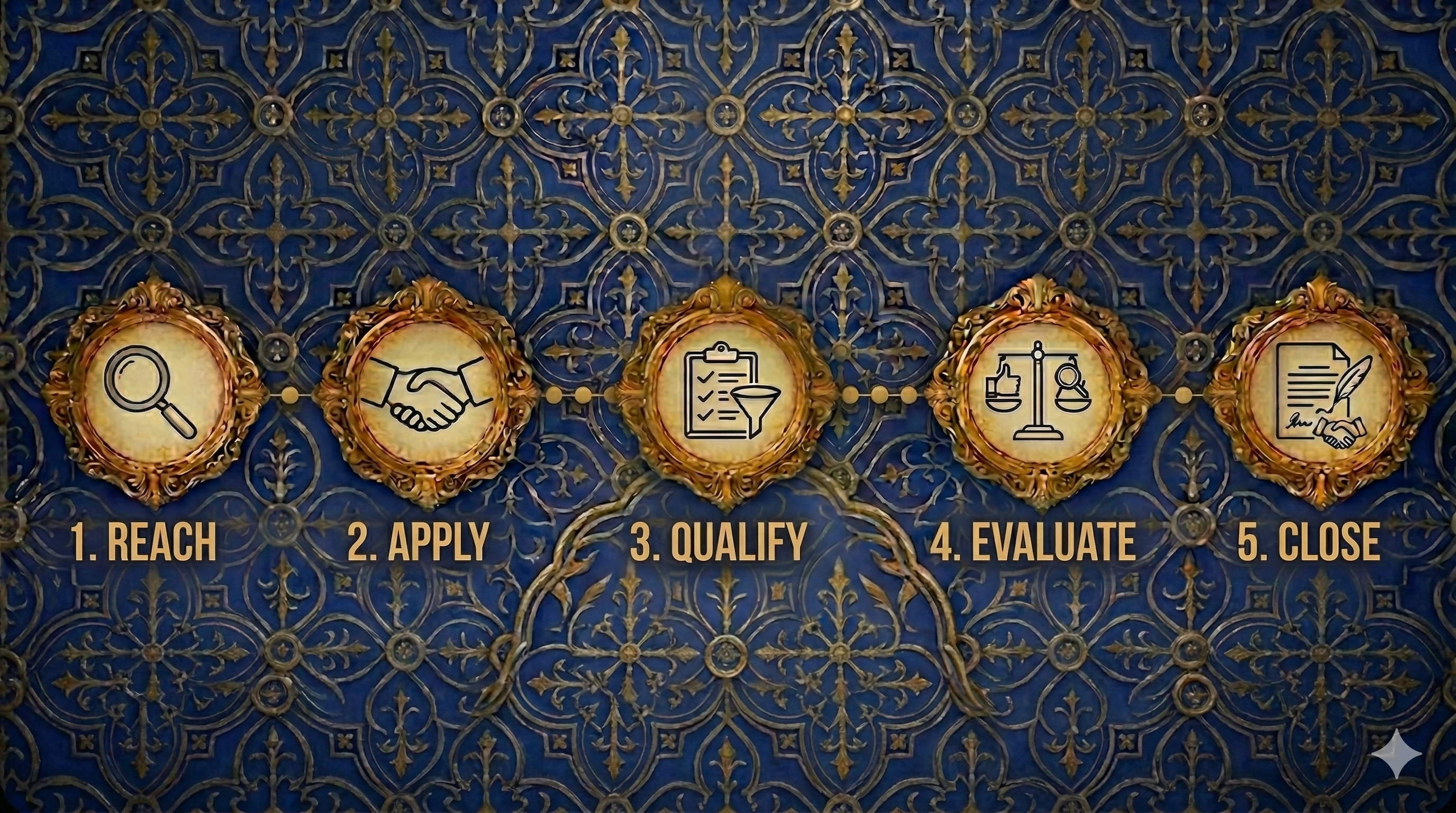
Five sub-stages, five problems
The framework blog keeps Stage 3 intentionally simple: you either attract candidates to you, or you source them directly. Both approaches are valid. Both have trade-offs. Most companies use a mix depending on the role.
But once you look underneath, the complexity comes into focus. Reaching candidates is not the same as getting them to apply. Filtering applications is not the same as evaluating candidates. Picking a winner is not the same as getting them to accept. Each sub-stage is its own problem, and each has its own vendor ecosystem.
1.Reach
The problemYou have a job to fill. How do you get it in front of the right people?
There are two fundamentally different approaches. Attract: you publish the job and hope the right candidate finds it. Job boards, aggregators, career pages, programmatic ads. The larger the audience, the higher the chance of a fit. But also: the more noise to filter. Source: you identify specific people (often passive) and reach out to them directly. Smaller pool, more targeted, higher quality. But significantly more cost and effort per candidate.
2.Apply
The problemYou reached the candidate. They clicked. Will they actually finish the application?
This sounds trivial. It is not. A broken apply flow kills everything you spent on Reach. Half of candidates drop off before submitting. A candidate who uploads their CV, then gets asked to type the same information into a form, quits.
3.Qualify
The problemYou now have 200 applications for one role. Most don't fit. How do you find the qualified ones without reading every CV?
LinkedIn processes 11,000 applications per minute. A single job posting can attract hundreds of applications in 48 hours. The volume is beyond what any human recruiter can process.
4.Evaluate
The problemYou filtered down to a shortlist. Can this person actually do the job?
Qualify is signal filtering. Evaluate is direct assessment. You want evidence, not signals.
5.Close
The problemYou picked a winner. Now they have to say yes.
In tight markets, a meaningful share of offers get rejected or countered. A dropped offer sends you back to Qualify, or worse, back to Reach.
Plus: the infrastructure layer
These vendors do not solve a problem within the hiring journey. They make the journey possible. Job board builders let anyone create a new board. Data providers feed those boards with the listings they show, and open a window into what is happening across the whole market: who is hiring, where, in which sectors, and on which platforms.
Plus: the AI agent layer
Unlike tools that solve a specific sub-stage of the hiring journey, these agents work end-to-end on behalf of one side of the marketplace. Jack searches, matches, applies, coaches, introduces candidates directly to hiring managers, and even helps them negotiate the salary, bypassing entire sub-stages. Jill does the same for the employer: from creating the offer to getting direct access to candidates ready to talk. This is where the hiring journey itself starts to disappear.
Methodology
This is a map as we interpret it from Blat. The categories are our own framing; others organize them differently. This is a snapshot from April 2026. Expect it to evolve as the market does.
This map is not exhaustive. Each category has many more players than shown, and new ones appear every month. If you think we are missing an important vendor, or you run a company that should be on this map, reach out on LinkedIn.